Standard delivery available islandwide and worldwide. Learn More

0
Your Cart
empty cart Your cart is currently empty! Return to Shop

Standard delivery available islandwide and worldwide. Learn More
0
Your Cart
empty cart Your cart is currently empty! Return to Shop
0
Your Cart
empty cart Your cart is currently empty! Return to Shop

Investing in Gold Jewellery? A DINIDU Guide for Purchasing Gold in Sri Lanka

One of the most common questions we get whenever a client visits our Colombo 07 store or messages us via WhatsApp is, ‘How do I know I am buying gold worthy of my investment?’. With years of industry expertise and excellence in advising clients, we know for a fact that buying gold in Sri Lanka is rarely an impulsive decision. Rather, it is a thoughtfully considered choice rooted in culture, family, craftsmanship and, quite often, long-term financial thinking. So, if you’re a first-time buyer in Sri Lanka or you’re looking to expand your jewellery investments, here are a few things to keep in mind when buying gold jewellery.

What Do 22Kt, 18Kt and 14Kt Gold Actually Mean?

Understanding the differences in gold Karatage is the most essential point to first keep in mind. Simply put, the karat amount tells you how much of a jewellery craft is composed of pure gold, expressed out of 24 parts. For instance, 

  • 24Kt gold is pure gold with all 24 parts being gold, making it 99.9% pure gold. However, its extremely high level of gold purity makes it softer and more prone to bending, causing it to be unsuitable for everyday jewellery.
  • 22Kt gold jewellery is 22 parts gold to two parts alloy, making it 91.6% pure gold. It offers a high level of gold purity while retaining enough strength and durability for statement jewellery.
  • 18Kt gold is made of 18 parts gold to six parts alloy, making it 75% pure gold. It offers a balance between purity, durability, and design flexibility, especially when setting diamonds and coloured gemstones, making it a popular choice for fine and statement jewellery.
  • 14Kt gold is made of 14 parts gold to 10 parts alloy, making it 58.5% pure gold. With a higher proportion of alloy, it is more durable and affordable, making it suitable for everyday-wear jewellery.
  1. These differences can be clearly seen in three ways, as we always explain to clients:
  2. The gold colour: 22Kt carries a deeper, richer yellow than 18Kt or 14Kt.
    The Durability: lower the Karatage, the more scratch-resistant the piece will be, since alloy metals are harder than gold itself. 
  3. The Price: a higher Karatage indicates a higher gold composition by weight, so it will always cost more. 

However, none of these options is “better” or “worse” in absolute terms, as the right choice simply depends on how the piece will be worn and what matters most to you in terms of durability or investment value.

22Kt vs. 18Kt: Are Gold Preferences Changing in the Sri Lankan Market?

Understanding the differences in gold Karatage is the most essential point to first keep in mind. Simply put, the karat amount tells you how much of a jewellery craft is composed of pure gold, expressed out of 24 parts. For instance, 

  • 24Kt gold is pure gold with all 24 parts being gold, making it 99.9% pure gold. However, its extremely high level of gold purity makes it softer and more prone to bending, causing it to be unsuitable for everyday jewellery.
  • 22Kt gold jewellery is 22 parts gold to two parts alloy, making it 91.6% pure gold. It offers a high level of gold purity while retaining enough strength and durability for statement jewellery.
  • 18Kt gold is made of 18 parts gold to six parts alloy, making it 75% pure gold. It offers a balance between purity, durability, and design flexibility, especially when setting diamonds and coloured gemstones, making it a popular choice for fine and statement jewellery.
  • 14Kt gold is made of 14 parts gold to 10 parts alloy, making it 58.5% pure gold. With a higher proportion of alloy, it is more durable and affordable, making it suitable for everyday-wear jewellery.
  1. These differences can be clearly seen in three ways, as we always explain to clients:
  2. The gold colour: 22Kt carries a deeper, richer yellow than 18Kt or 14Kt.
    The Durability: lower the Karatage, the more scratch-resistant the piece will be, since alloy metals are harder than gold itself. 
    The Price: a higher
  3. Karatage indicates a higher gold composition by weight, so it will always cost more. 

However, none of these options is “better” or “worse” in absolute terms, as the right choice simply depends on how the piece will  be wornand what matters most to you in terms of durability or investment value.

What Determines the Gold Price in Sri Lanka?

The gold price Sri Lanka sees daily is derived from the international spot price, set on global commodity markets in USD, converted to LKR using the prevailing exchange rate. As both figures shift constantly, the local rate tends to move meaningfully within a single week.

Locally, we price using the gold sovereign, also called the pawn, equal to eight grams of gold. The gold sovereign price is our standard reference, much like the troy ounce (equal to 31 grams), which is used internationally. Generally, gold jewellery pricing in Sri Lanka begins with the sovereign rate for the relevant Karat before other costs are added.

What Else Goes Into the Final Price of Gold?

The gold price Sri Lanka sees daily is derived from the international spot price, set on global commodity markets in USD, converted to LKR using the prevailing exchange rate. As both figures shift constantly, the local rate tends to move meaningfully within a single week.

Locally, we price using the gold sovereign, also called the pawn, equal to eight grams of gold. The gold sovereign price is our standard reference, much like the troy ounce (equal to 31 grams), which is used internationally. Generally, gold jewellery pricing in Sri Lanka begins with the sovereign rate for the relevant Karat before other costs are added.

CRAFTSMANSHIP CHARGES Covers the goldsmith’s skilled labour, which will vary depending on the complexity of the jewellery piece.
WASTAGE Accounts for the small, unavoidable loss of gold that occurs during the crafting process.
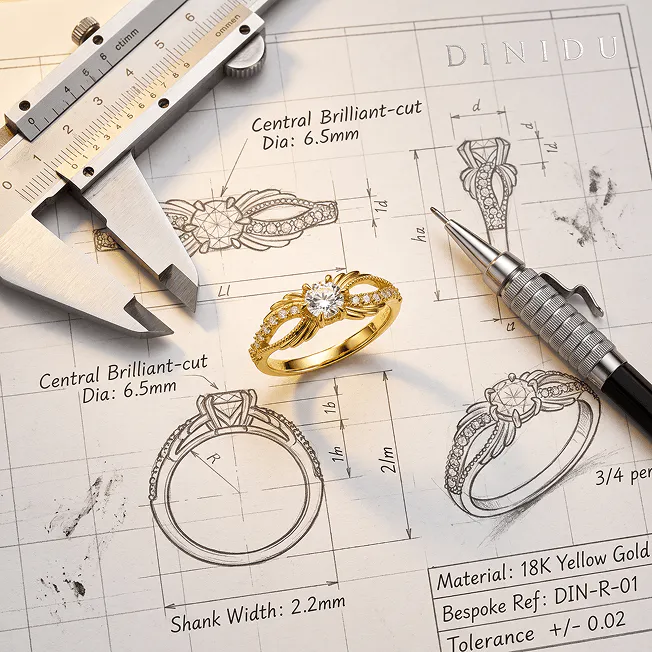
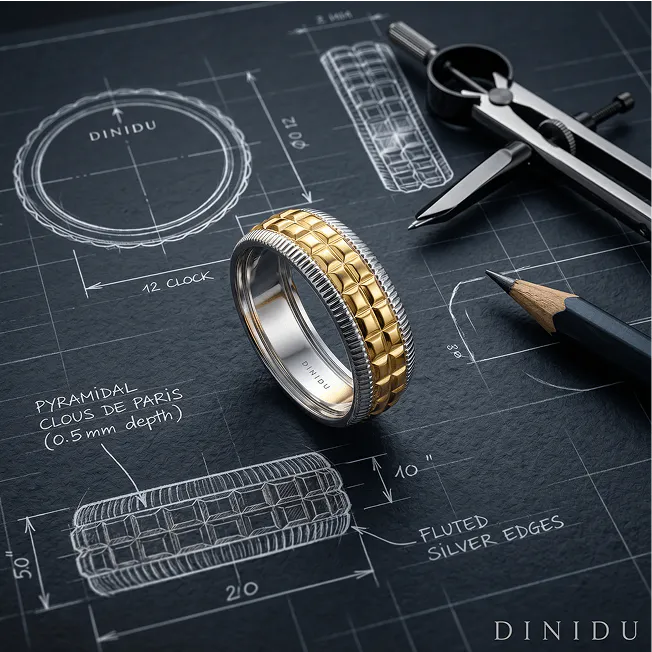
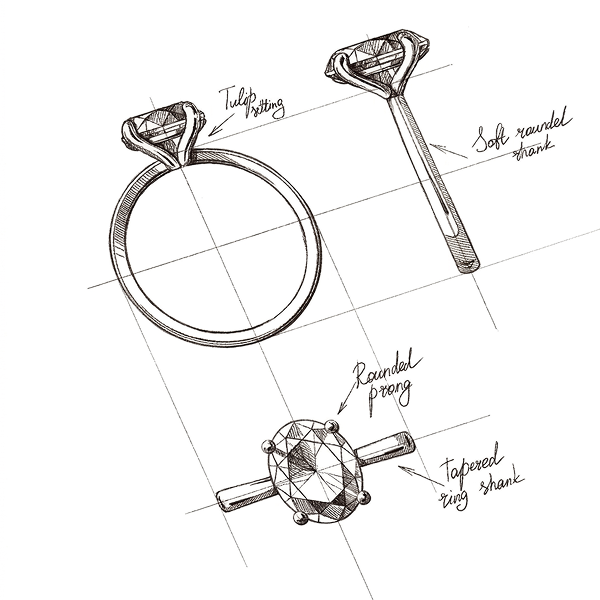
DESIGN CHARGES When customising jewellery, most jewellers, including DINIDU, use modern technology to visualise a design before bringing it to life. Design charges will apply for a bespoke CAD or 3D-rendered design created for a custom piece.
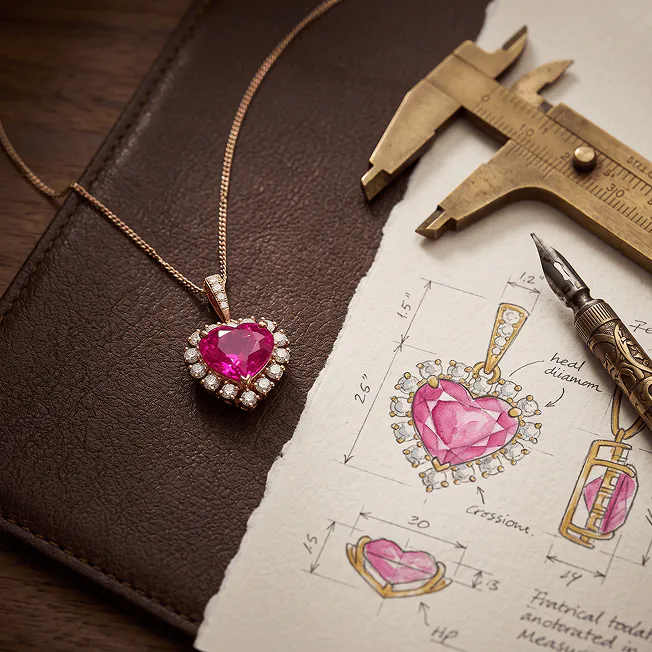
STONE SETTINGS If a jewellery design includes centre or accent stone settings, the gemstone value based on the carat weight, clarity, colour, cut and inclusions will determine the price of the final jewellery craft.

At DINIDU, we ensure every client sees this breakdown before manufacturing begins, because transparency is something we consider
non-negotiable when buying gold in Sri Lanka.

Is Gold Jewellery a Sound Investment?

Whenever we are approached with this question, our answer is always the same: gold in Sri Lanka serves as adornment and investment simultaneously. The LKR gold price has risen considerably over the past decade, driven by global gold trends and currency movement, so a jewellery piece bought years ago has typically appreciated in value. 

However, it is important to note that only the gold weight itself will carry a resale value. Other costs incurred when purchasing, including craftsmanship charges, etc., typically are not included in its resale value. So for clients prioritising investment over design or modern trends, we recommend simpler, heavier 22K pieces to maximise the gold-to-price ratio.

Hallmarks and Certification: How to Verify Authenticity?

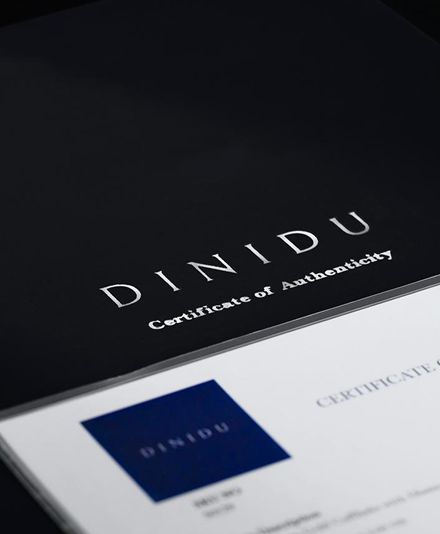
The National Gem and Jewellery Authority (NGJA) is Sri Lanka’s regulating body for the gem and jewellery trade and sets the standards of gold jewellery authenticity and value. Generally, the authenticity of a jewellery piece is communicated by a finesse stamp such as ‘916’ or ’22Kt’ and ‘750’ or ’18Kt’ on the gold band. Beyond these hallmarks, documentation such as an authenticity certificate will be provided with a jewellery purchase, indicating the gold weight, karat and price breakdown, which becomes the buyer’s official reference for insurance, exchange or resale. 

At DINIDU, we offer our clients an in-house certification that guarantees the gold purity, weight and worth. Further, as our gold purity is independently verified through the NGJA, each client is ensured a third-party assurance rather than our word alone. This allows any DINIDU customer to request an authenticity certificate from the NGJA through us to confirm the metal’s authenticity, which will be provided at an additional cost.

Why DINIDU is The Choice for Your Next Gold Purchase

Every jewellery craft we design is sourced through established channels and independently verified by the NGJA, so the karat on a DINIDU piece is never simply self-declared. DINIDU is also committed to the use of fairmined gold and silver, ensuring that the metals we source come from mining operations that meet rigorous environmental, social and labour standards, supporting both sustainable practices and local communities.  

In addition to a variety of payment plans, including credit, debit and cash instalment plans, as well as Koko and Mintpay alternatives, we also offer a gold exchange programme, where clients can bring their existing gold with necessary certification, have it assessed at the prevailing gold rate, and apply that value towards purchasing a new piece. It is our way of ensuring that a relationship with clients extends well beyond the original purchase while offering our clients something new with time. So, for anyone exploring the gold jewellery Colombo has to offer, DINIDU offers a meaningful point of difference in service, quality and craftsmanship, with a lasting commitment to every client long after the purchase is made.

Start Your Gold Investment with DINIDU

FAQ

What is the best karat of gold to buy in Sri Lanka?
It depends on your priority. 22K suits those wanting richer colour and stronger investment value, while 18K offers greater durability for daily wear and gemstone-set pieces.
It can shift daily, and sometimes several times within a week, following international spot prices and exchange rate movements.
A sovereign, or pawn, is the traditional Sri Lankan unit of gold weight equal to eight grams (8 g) and is used as the standard pricing reference.
Look for a hallmark referencing the gold weight stamped on the gold band or jewellery item, along with an official certification of the weight and karat from the jeweller.
22K gold contains a higher proportion of pure gold (91.6%) by weight, in comparison to 18K gold (75% pure gold), so the metal cost is greater for a jewel of the same size.
The gold content itself generally retains and appreciates in value. While additional costs such as craftsmanship charges and stone settings may be incurred at the initial purchase, they do not carry the same resale value over time.
Craftsmanship charges, wastage, design fees for bespoke pieces, and stone costs where diamonds or gemstones are included may be incurred in addition to the price of gold.
Yes, DINIDU offers a gold exchange programme where existing jewellery pieces supported by their original certification are assessed at the prevailing market rate and applied toward a new purchase.
18K is generally more resistant to scratches and better suited to daily wear, while 22K is often chosen for bridal and ceremonial pieces.